
“An Odious Class
of Offences”
How colonial criminal law helped construct the morality it claimed to reflect.
Read the revised paper ↗RESEARCHER. ORGANISER. BUILDER. PAINTER.
I’m Ishaan. I bridge liberal ideas
and conservative cultures.
FROM JAIPUR. BUILT WITH PEOPLE, EVERYWHERE.
THE WORK / PICK A THREAD
How do more people get a place in the room?
A youth-led inclusion network.
Local partners. Shared purpose. Real reach.
01 / ON THE GROUND
Move the institution. Reach the room.
Pick a place to see how the work happens.
THE WORK, UP CLOSE
Six moments across the network.
Choose a city or play the sequence.
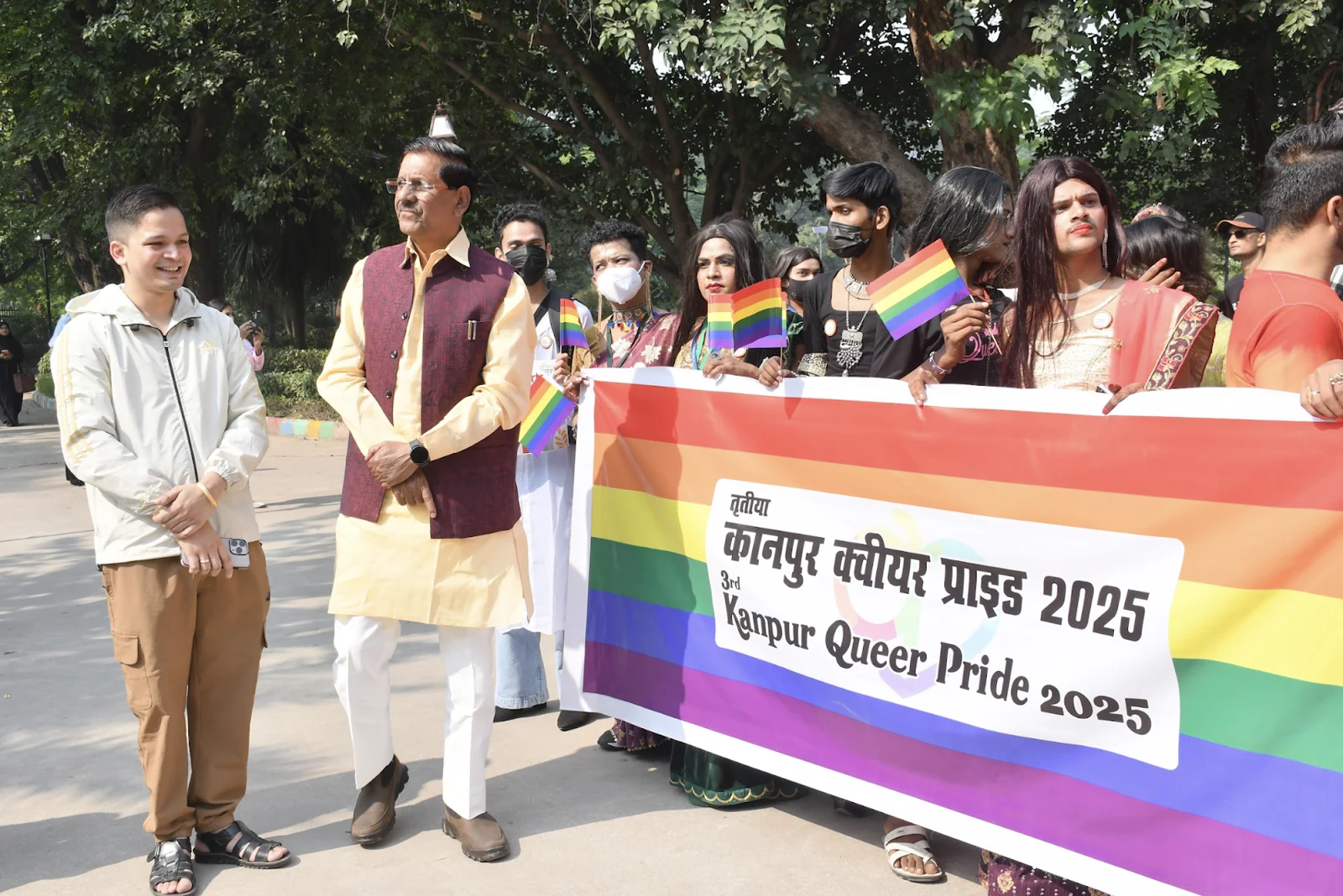
300 Pride attendees
~600 at a separate financial-inclusion workshop
THE INSTITUTIONAL THREAD
03 / INSIDE THE ROOM
Two rooms. Two approaches. One aim: make acceptance possible.
GLOBAL IDEAS.
LOCAL ROOTS.
WHAT I’M THINKING ABOUT
How colonial criminal law helped construct the morality it claimed to reflect.
Read the revised paper ↗Safavid contact and the regulation of same-sex conduct in Mughal India.
Read the abstract ↗02 / THE IDEA
Organic liberalisation. The theory I built—and the exception that made it personal.
Conceptual model, not a dataset or a prediction.
THEN THE QUESTION CHANGED
Realising I was gay turned an abstract interest in progress into a question about my own life.
The original model is a conjecture. Here is the legal history that puts it to the test.
FOLLOW THE RESEARCH ↘SELECT A CASE. OPEN ITS SOURCE.
04 / THE HISTORY BEHIND THE QUESTION
My research asks how institutions construct the norms they claim merely to reflect.
The Colonial Construction of Sexual Morality in British India
Read the paper ↗Submitted to The Concord Review · 1 August 2026OPEN THE ARGUMENT
A FEW LEGAL MILESTONES
OFF THE CLOCK

SELECTED ARTWORK
Open any artwork to see it in full.
THE ARCHIVE / START HERE
Pick a category. Find the original. Follow the work.
05 / OTHER WAYS I BUILD
Projects in financial access, water, youth voice and environmental action. Choose one to explore the work.